





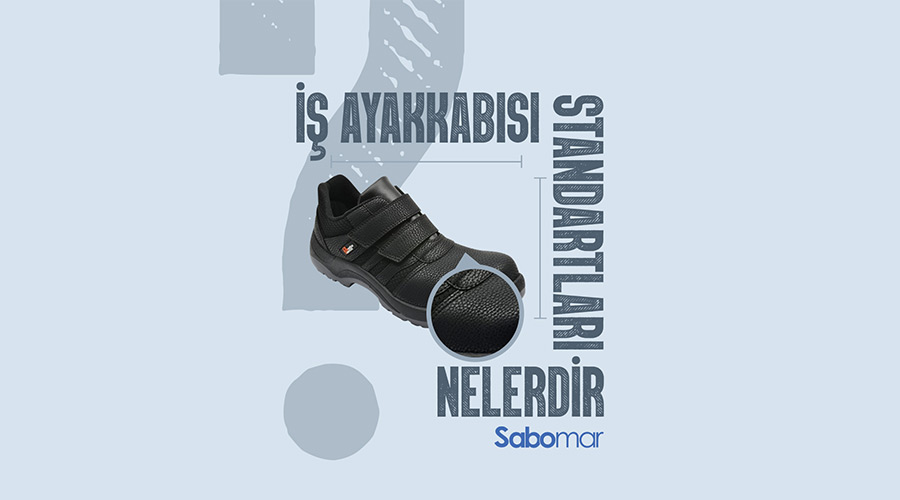
İş Ayakkabıları arasında seçim yaparken dikkat etmemiz gereken en önemli etken ayakkabının almış olduğu sertifikalardır. Sabomar olarak bu yazımızda sizler için bir iş ayakkabısının alabileceği sertifikaları ne anlama geldikleri ile birlikte derledik.
İş Ayakkabılarında “S” Standartları Nelerdir?
İş Ayakkabılarında SB Standardı: Bu sertifika iş ayakkabısının 200 Joule darbeye ve 15 kN çarpmaya dayanıklı koruyucu buruna sahip olduğunu belirtir.
İş Ayakkabısı S1 Standardı: Bu sertifika SB sertifikasına artı olarak kuru ortamlarda kullanıma uygun olduğu, kapalı arka kısım (topuk), anti statik, enerji emici topuk, hidrokarbonlara dayanım kullanıma uygun olduğunu belirtir. Tabanı kaymaz ve asit gibi etken maddelere karşı dayanıklıdır. Anti statik özelliğe sahip taban elektrik çarpmalarına karşı koruma direnç sağlamaktadır.
S1P: Bu sertifika S1 sertifikasına ek olarak, ayakkabının delinmeye dayanıklı olduğunu göstermektedir.
İş Ayakkabısı S2 Standardı: S1 Standardına ek olarak ayakkabının ıslak ortamlarda kullanıma uygun olduğunu belirtir. Taban yapısı yağa ve asit e karşı ekstra dayanıklıdır. Anti statik malzeme ile üretilirler.
İş ayakkabısı S3 Standardı: S2 Standardına ek olarak, delinmeye dayanıklılık, girintili çıkıntılı (tırtıklı) dış taban sunmaktadır.
İş Ayakkabısı “O” Standartları
EN ISO 20347: İş ayakkabıları (burunsuz)
OB: Yırtılmaya, aşınmaya, hidrokarbonlara, kaymaya dirençli, birleşik katmanlı; krom VI hariç, su buharı geçirgenlik ve ergonomik özellikli
O1: OB + Topuk kısmında enerji emme + Anti statik + Kapalı arka kısım (topuk)
O2: O1+Saya kısmı su sızdırmaz ve emmez
O3: O2+Delinmeye dayanıklılık + Girintili çıkıntılı dış taban (tırtıklı)
İş Ayakkabısı “P” Standartları
EN ISO 20346: Koruyucu ayakkabılar (100 Joule koruyucu burun)
PB: 100 Joule Koruyucu burun + basınç dayanımı + 1000 Newton
P1: PB + Kapalı arka kısım topuk + anti statik + enerji emici topuk
P2: P1 + Saya kısmı su sızdırmaz ve emmez
P3: P2 + delinmeye dayanıklılık
Dış Taban Sertifikaları
HRO: Isıya dayanıklı taban
FO: Hidrokarbonlara dayanım
SRA: Seramik yüzey üzerinde kayma direnci
SRB: Çelik yüzey üzerinde kayma direnci
SRC: SRA+SRB
Tekli Özel Sertifikalar
P: Delinmeye dayanıklılık
C: İletken ayakkabı
A: Anti statik
HI: Isı izolasyonu
CI: Soğuk izolasyonu
E: Topuk kısmında enerji emme
WR: Su geçirmezlik
M: Ayak tarağı koruyucu
AN: Ayak bileği koruyucu
CR: Kesilmeye dayanıklılık
ESD: Elektrostatik boşalım
WRU: Saya kısmı su sızdırmaz ve emmez
Zincir Testere Direnci Standardı
EN ISO 17249: Zincir testere ile kesilmeye dirençli koruyucu ayakkabılar (Orman, ağaç kesimi, vb.)
Sınıf 1: Zincir Hızı 20m/s
Sınıf 2: Zincir Hızı 24m/s
Sınıf 3: Zincir Hızı 28m/s
EN 12568
Ayak ve bacak koruyucuları
Bu standart ise, KKD (örneğin EN ISO 20345, EN ISO 20346 ve EN ISO 20347 ile tarif edildiği gibi) ayakkabı bileşenleri olarak işlevini yerine getirmesi için amaçlanan ayakkabı burnu ve mekanik nüfuz etmeye dirençli takviyeler için özellikleri ve deney metotlarını kapsar.
Sizler de sitemizde bulunan onlarca model iş ayakkabısı, iş botu ve iş çizmesi arasından iş yeriniz için en uygun modeli seçebilirsiniz.
Buraya tıklayarak tüm iş ayakkabısı modellerimize ulaşabilirsiniz.

Yorum yap